
SBP Strategy 2026-2030
Expanding the contribution of good biomass to the global bioeconomy
We have entered a new phase of development with the launch of our Strategy 2026-2030. This five‑year Strategy builds on more than a decade of experience and sets a clear course for strengthening responsible biomass sourcing as part of the global transition to a circular bioeconomy.
On this page, you can download both the full Strategy and a concise summary outlining the key themes, ambitions, and commitments that will guide SBP over the coming years.
About our Strategy
As the world accelerates efforts to decarbonise, the role of sustainably sourced biomass is becoming increasingly important, and increasingly scrutinised. Our Strategy for 2026-2030 sets out how we will lead with integrity, innovation and impact, ensuring that only good biomass – biomass that is legal, sustainable, traceable and socially responsible – is recognised and valued in global markets.

SBP Strategy 2026-2030


Our Strategic Aims
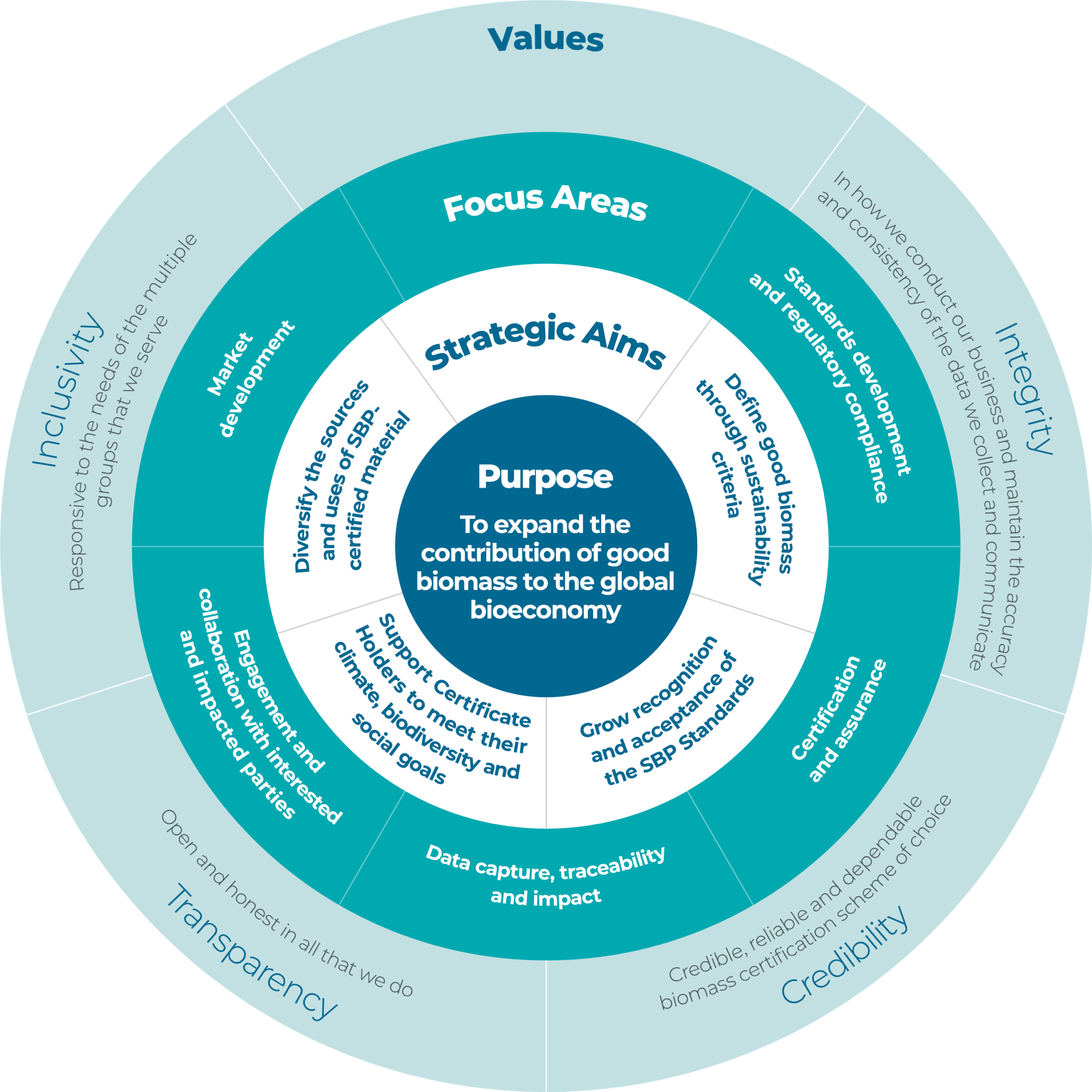
Our Strategy defines our long‑term direction across four Strategic Aims:
1. Define good biomass through sustainability criteria
We will continue to strengthen and promote SBP’s science‑based sustainability criteria, ensuring certified biomass protects forest carbon, biodiversity, soil and water quality, and community rights.
2. Grow recognition and acceptance of the SBP Standards
Through transparent engagement with regulators, markets, civil society and rights holders, we aim to expand the relevance, credibility and uptake of SBP certification globally.
3. Support Certificate Holders to meet their climate, biodiversity and social goals
We will enhance the value of certification through robust assurance, improved data systems, and practical tools, such as the upcoming SBP GHG Calculator, to help organisations demonstrate positive environmental and social performance.
4. Diversify the sources and uses of SBP‑certified material
We will expand responsibly into new feedstocks (such as agricultural residues), new geographies, and new end‑use sectors including industrial applications, bio‑based materials, transport fuels and carbon removals.
Our Focus Areas
To deliver our Strategic Aims, we will prioritise five cross‑cutting Focus Areas:
1. Standards development and regulatory compliance
2. Certification and assurance
3. Data capture, traceability and impact
4. Engagement and collaboration with interested and impacted parties
5. Market development
These provide the operational framework that will guide annual planning and performance reporting throughout the Strategy period.